

Importing PVC and WPC Boards from China: Landed Cost, HS Codes and Customs Documents
The FOB price on a quotation is not what your board costs. By the time a container of PVC foam board reaches your warehouse, the price per sheet has been shaped by ocean freight, insurance, duty, clearance, inland delivery — and by three or four avoidable mistakes that most first-time importers make.
This guide walks through the full landed-cost picture for PVC and WPC board imports from China: what to include, which HS codes apply, how to claim the duty savings most buyers miss, how much actually fits in a container, and the documents you will need at destination.
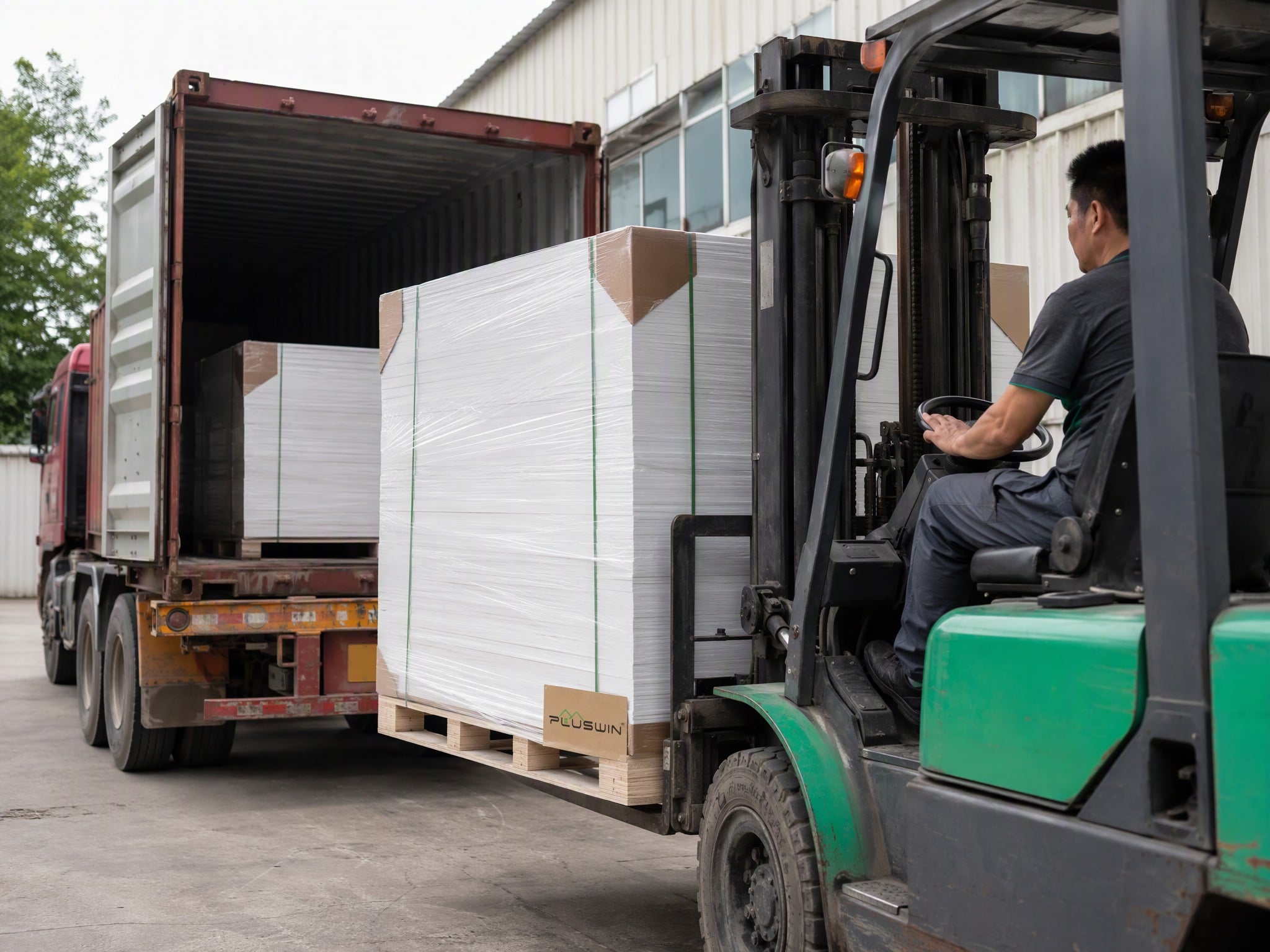
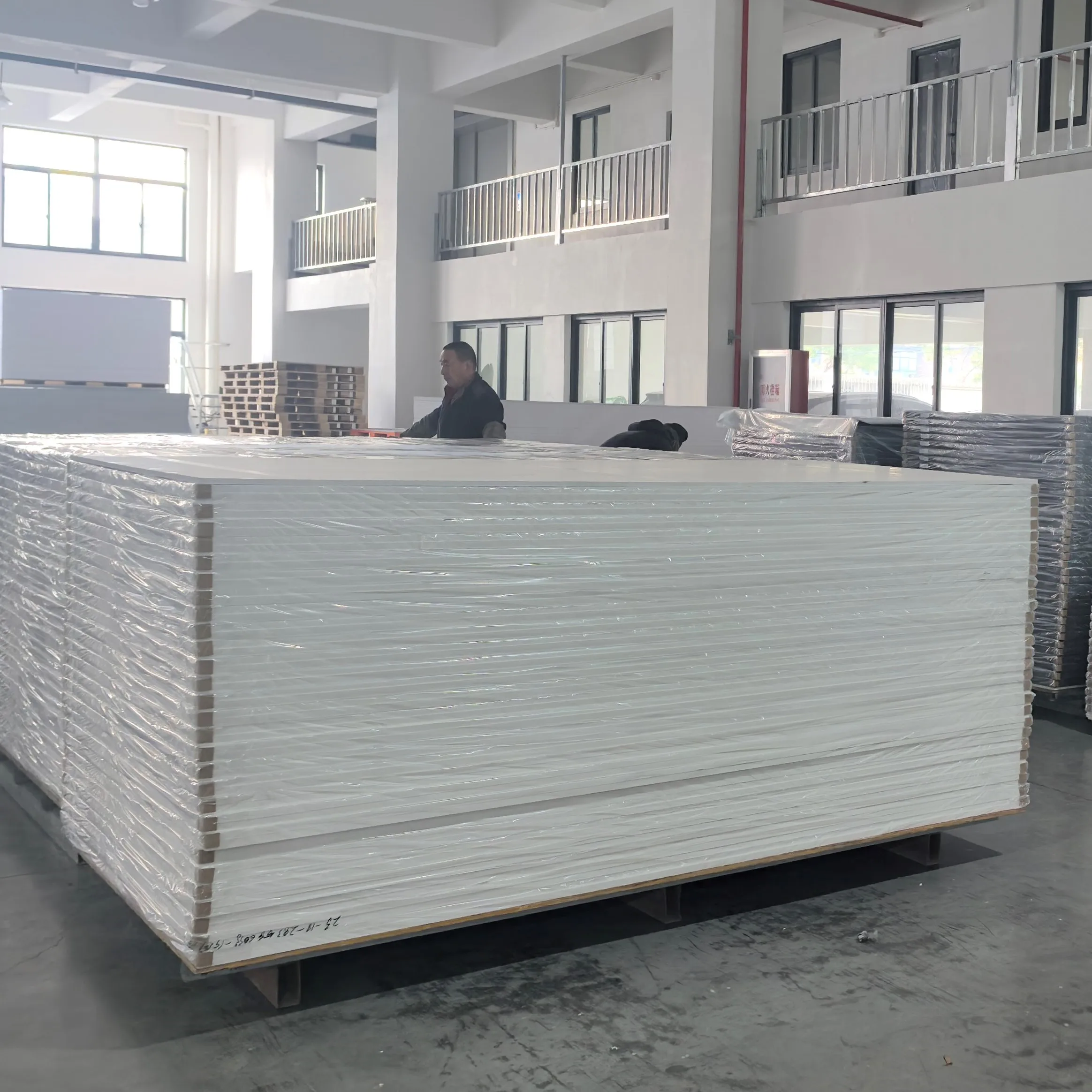
Figure 1. Palletized PVC foam boards being loaded for container shipment.
What "landed cost" actually includes
Landed cost is the total cost of getting the goods into your warehouse, ready to sell or use. For board imports it has six components:
|
Component |
Notes |
|
1. Goods value |
The FOB price per sheet × quantity |
|
2. Ocean freight |
Varies by route, season and whether the container is full |
|
3. Marine insurance |
Typically a small percentage of cargo value — see the note on CIF below |
|
4. Import duty |
Depends entirely on the HS code and your country's tariff schedule, and on whether a preferential rate applies |
|
5. Clearance and port charges |
Brokerage, terminal handling, documentation, inspection if selected |
|
6. Inland delivery |
Port to your warehouse |
Two of these — duty and freight — are where the largest avoidable differences sit. Duty is discussed in section 3; freight in sections 4 and 5.
HS codes for PVC and WPC boards
The codes most commonly used for our product range:
|
Product |
Commonly used HS code |
|
PVC foam board (Celuka / free foam / co-extrusion) and WPC board |
3921.12 / 3921.90 |
|
Laminated / paint-free board |
3921.12 / 3921.90 |
|
PVC marble UV board |
3925.90 |
|
PVC / WPC wall panel |
3921.12 / 3921.90 / 3918.10 |
|
Edge banding (PVC / ABS) |
3916.20 |
Important: final classification is determined by the customs authority at destination, and it can vary between countries for the same product. Classification directly affects your duty rate, so we recommend confirming the code with your local broker before ordering. We will issue documents using the code you confirm.
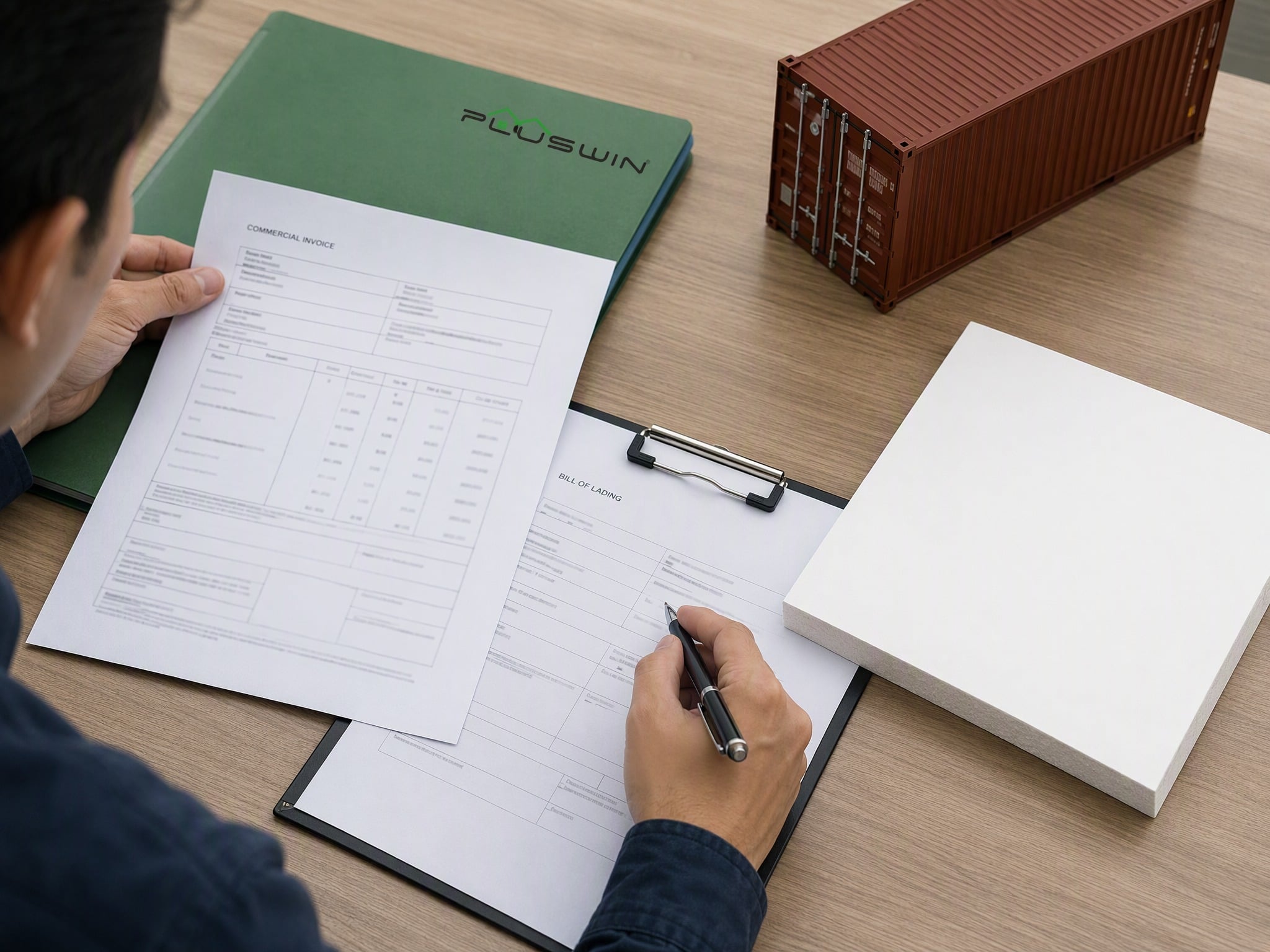
Figure 2. Reviewing customs and shipping documents with the product sample.
Note that our default is FOB Ningbo. If you need DDP or DAP terms, those are accepted on a per-country and per-order basis — see section 5.
Certificates of origin and the duty savings most buyers miss
This is the single most commonly overlooked item in board imports. Many buyers accept the standard commercial documents and pay full duty, when a preferential certificate of origin would have reduced or eliminated it.
We can issue all nine of the following:
|
Certificate |
Trade agreement / region |
|
CO |
General, worldwide |
|
FORM E |
China–ASEAN FTA |
|
FORM A |
GSP |
|
FORM F |
Chile |
|
FORM P |
Pakistan |
|
FORM R |
Peru |
|
China–Korea FTA certificate |
China–Korea FTA |
|
FORM AU |
China–Australia FTA |
|
RCEP CO |
RCEP |
Terms: processing takes 1–3 working days, the certificate cost is borne by us, and we use the CCPIT certification channel. You need to provide your company information and the data required for the certificate — this is worth preparing before you place the order, not after.
If your market is covered by FORM E or RCEP, ask for it. Buyers who do not ask often do not receive it.
Container maths: what actually fits
PVC board is heavy cargo, and this changes the loading logic completely. Most importers assume the container fills by volume. For PVC board, it usually hits the weight limit first.
|
Container |
What limits it |
Practical figure |
|
40HQ |
Weight limit reached first |
~28 tonnes; volume up to ~64 m³ |
|
20GP |
Volume limit reached first |
~25 m³ usable |
Confirmed actual 40HQ loadings from our shipments:
|
Specification |
Sheets per 40HQ |
|
18 mm · 0.55 g/cm³ · white |
940 sheets |
|
17 mm · 0.5 g/cm³ · white |
1,100 sheets |
|
15 mm · 0.55 g/cm³ · white |
1,130 sheets |
Two effects worth planning around:
Lower density loads more. Free foam at 0.3–0.35 g/cm³ loads roughly 60% more by count than a mid-range board at the same thickness.
Higher density loads less. High-density Celuka at 0.9–1.0 g/cm³ loads nearly half the sheet count.
Weight is generally controlled at 28 tonnes; if your destination port has a specific weight restriction, the loading is recalculated separately.
Practical implication: a "cheaper per sheet" quotation on heavier board can cost you more per delivered square metre, because you ship fewer sheets in the same container. Compare cost per cubic metre or per thousand sheets delivered, not per sheet quoted.
A loading calculation table is available on request. Because most orders mix multiple specifications, confirm the exact loading with your sales contact — actual loading prevails.
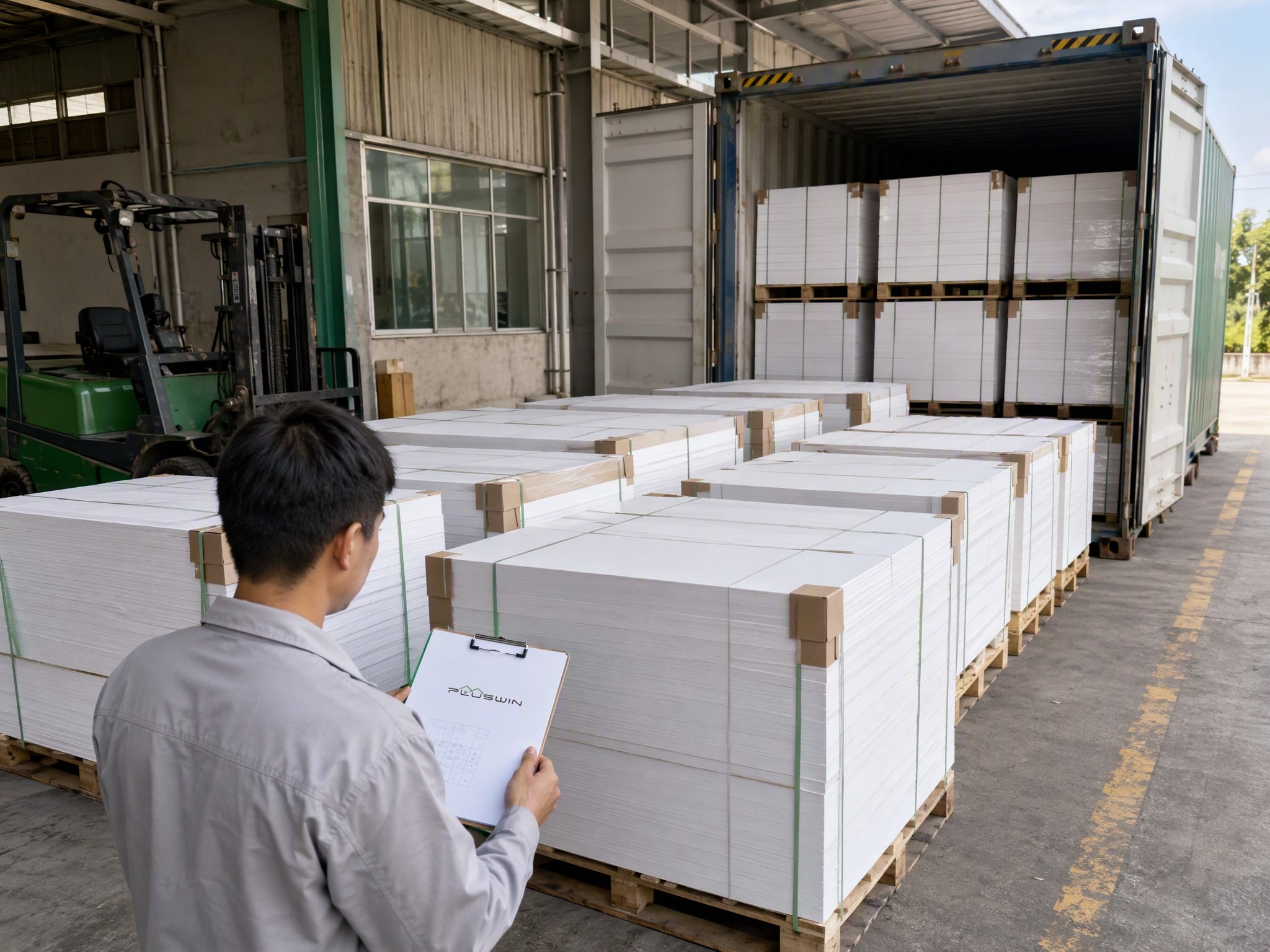
Figure 3. Container load planning for dense palletized board cargo.
Incoterms compared: who pays what
|
Term |
Includes |
Who arranges freight and insurance |
|
EXW |
Goods only |
Buyer — from the factory gate |
|
FOB |
Goods + inland freight + export clearance + loading |
Buyer — from the port of loading |
|
CNF / CFR |
FOB + ocean freight |
We arrange freight; buyer insures |
|
CIF |
CNF + marine insurance |
We arrange both |
|
DDP / DAP / DDU |
Delivered to destination |
We arrange, calculated per order |
|
FCA / CPT / CIP |
Accepted |
Per agreement |
Our default quotation term is FOB Ningbo. Other ports can be nominated, with the additional inland freight calculated separately; our factory is roughly 2–3 hours from Ningbo Port.
Two details worth knowing:
Free CNF-to-CIF upgrade. For orders of one container or more, we upgrade CNF customers to CIF at no extra cost — we purchase the marine insurance ourselves. Sum insured is 110% of cargo value, and an insurance claim must be filed within 15 days of receipt. This does not apply when the customer nominates their own freight forwarder.
DDP requires your import credentials. To quote and clear under DDP we need your import-clearance credentials or tax IDs (VAT, EORI or IOR). Whether the DDP quote includes destination duties and VAT, and how exchange-rate movements are handled, is calculated separately per order.
Customer-nominated forwarders are accepted with no booking or co-ordination fee.
Sea freight transit times
Typical direct-service transit times from Ningbo or Shanghai. These exclude booking lead time, customs clearance and inland delivery.
|
Destination |
Transit time |
|
Southeast Asia |
5 – 12 days |
|
Middle East |
18 – 25 days |
|
US West Coast |
15 – 22 days |
|
US East Coast |
30 – 38 days |
|
North West Europe |
30 – 40 days |
|
South America |
30 – 45 days |
|
Africa |
28 – 42 days |
Actual schedules per booking prevail. Peak seasons and transhipment routings will extend these.
Documents you will need
Standard shipping documents we provide:
Commercial Invoice
Packing List
Bill of Lading
Proforma Invoice
Loading Photos
Insurance Policy (CIF orders)
Certificate of Origin
On request:
All 13 certification reports, shipped with the goods by default
SDS and TDS v4.1
MSDS — ours confirms no GHS hazard classification, which helps demonstrate non-dangerous goods
Invoice and packing-list formatting to suit local practice
Documents are available electronically or as originals, and the courier fee for original documents is borne by us.
For destination clearance you will additionally need your own importer registration (VAT / EORI / IOR), and depending on the market: CE for the EU, RoHS and REACH reports, or ASTM E84 for North American building projects.
Two limitations we state openly:
Special invoice formats — for example Middle East consular legalisation or embassy attestation — can be arranged, but this is a chargeable service.
We do not currently provide handling assistance for shipments detained during destination-port inspection.
Six costs that blow up a first order
1. Density shortfall. You pay for 0.6 g/cm³ and receive 0.48. The sheet count is right, the pallet weight is slightly low, and nobody notices until the boards are machined. Specify density with a tolerance and verify on receipt.
2. Thickness tolerance left unwritten. Agree a tolerance and put it in the PI. This is the most common specification gap in board imports.
3. Non-compliant wooden packing. Wooden packaging must meet ISPM 15 — heat treatment or methyl bromide plus an IPPC mark — in the EU, USA, Australia, Canada, Japan, Korea, Brazil and elsewhere. Non-compliant packaging can be held, returned, or treated at your cost at destination. Our standard pallets are fumigation-free, so no IPPC mark is required and there is no fumigation surcharge. Fumigation-free pallets are priced at USD 25–40 per pallet, confirmed per order.
4. Duty paid that need not have been. See section 3. If your market is covered by FORM E, RCEP, FORM AU or another FTA, ask for the certificate at the order stage.
5. Container mis-planning. Ordering 1,100 sheets of 18 mm board for a 40HQ and discovering only 940 fit leaves you paying for a second shipment. Confirm the loading before you commit.
6. Colour batch variation. Slight colour variation between production batches is normal for plastic sheet. If a project must match, order the full quantity at once and retain an approved sample. We keep approved samples for one year as the reference for later batches.
First-order checklist
Copy this and work through it before you place a purchase order.
SPECIFICATION
☐ Process named (Celuka / free foam / co-extrusion / WPC / laminated / wall panel)
☐ Density with tolerance (e.g. 0.55 g/cm³ ± 0.02)
☐ Thickness with tolerance
☐ Sheet size, and whether custom sizes are acceptable
☐ Colour, with an approved physical sample retained
COMMERCIAL
☐ MOQ confirmed (from 50 sheets; container mixing allowed at no extra charge)
☐ Incoterm agreed (default FOB Ningbo; CIF available at no extra cost for CNF orders of 1+ container)
☐ Deposit terms (20–30%) and balance timing confirmed
☐ Lead time confirmed (in-stock 2 days · 1–2 containers 30 days · 3–5 containers 45 days)
☐ Container loading checked against your target quantity
COMPLIANCE AND DOCUMENTS
☐ HS code confirmed with your local broker
☐ Certificate of origin requested if your market has an FTA (FORM E / RCEP / FORM AU etc.)
☐ Certification reports requested and checked for expiry dates
☐ TDS and SDS obtained
☐ Import credentials ready if shipping DDP (VAT / EORI / IOR)
RISK
☐ Marine insurance arranged (included on CIF orders of 1+ container, sum insured 110%)
☐ Packing method confirmed (fumigation-free pallet avoids ISPM 15 issues)
☐ Claim window understood (quality claims: 30 days; transit insurance claims: 15 days)
Frequently asked questions
What HS code applies to PVC foam board?
Codes commonly used are 3921.12 or 3921.90 for PVC foam board and WPC board, 3925.90 for PVC marble UV board, and 3916.20 for edge banding. Final classification is determined by the customs authority at destination, so confirm with your local broker before ordering.
Can you provide a FORM E or RCEP certificate of origin?
Yes. We can issue CO, FORM E, FORM A, FORM F, FORM P, FORM R, China–Korea FTA, China–Australia FTA (FORM AU) and RCEP certificates. Processing takes 1–3 working days and the cost is borne by us.
How many boards fit in a 40HQ container?
Confirmed actual loadings include 940 sheets of 18 mm at 0.55 g/cm³, 1,100 sheets of 17 mm at 0.5 g/cm³, and 1,130 sheets of 15 mm at 0.55 g/cm³. Weight is generally controlled at 28 tonnes. Because most orders mix specifications, confirm the figure for your exact mix.
Is marine insurance included?
For CNF orders of one container or more, we upgrade you to CIF free of charge and purchase the marine insurance ourselves, with a sum insured of 110% of cargo value. Claims must be filed within 15 days of receipt. The upgrade does not apply when you nominate your own freight forwarder.
What is the minimum order?
From 50 sheets for small-volume orders, though container-scale MOQs apply per product line. Mixing different thicknesses, densities and product lines in one container is allowed at no extra charge.
What documents are needed to clear the goods?
Commercial invoice, packing list, bill of lading and certificate of origin, plus market-specific compliance documents and your own importer registration. We supply the full export documentation set, all 13 certification reports, SDS/TDS and loading photos.
Get a landed-cost estimate
Send us your destination port, product specification and target quantity. We will return the container loading for your mix, the applicable certificate of origin, the current lead time and a full documentation list — usually within 48 hours.
Hangzhou Jiaying Trade Co., Ltd. (Pluswin) — manufacturer and exporter of PVC and WPC boards since 2006. FOB Ningbo · 96 countries served · 13 active certifications from SGS, Intertek and FEMKO · free CNF-to-CIF upgrade on orders of one container or more.
Recommended Products

Hot News
-
How to Read a PVC Foam Board TDS (and Write a Spec That Protects You)
2026-10-22
-
Importing PVC and WPC Boards from China: Landed Cost, HS Codes and Customs Documents
2026-10-22
-
PVC and WPC Board Fire Ratings Explained: ECE R118, ASTM E84 and EN 13501-1
2026-10-22
-
How to Cut, Drill and Bend PVC Foam Board: A Complete Fabrication Guide
2026-09-24
-
PVC & WPC Foam Board FAQ
2026-09-24
-
PVC Foam Board & WPC Board FAQ: Products, Customization, Quality and Shipping
2026-09-08
-
How to Test the Quality of PVC Foam Board: A Practical Buyer’s Guide
2026-09-08
-
Luxury Without the Price Tag: How PVC Marble Sheets Are Redefining Modern Interior Aesthetics
2026-08-14
-
Discover the rigorous quality control process inside the PLUSWIN factory. Learn how we guarantee consistent thickness, zero formaldehyde, and superior durability in every PVC board batch
2026-07-21
-
CustomSize PVC Foam Boards from Professional Manufacturer JIAYING PLUSWIN
2026-06-05