

Celuka, Forex, Foamex, Sintra? What PVC Foam Board Names Actually Mean
|
The short answer The trade name is not the specification. Order by process, density, thickness tolerance, sheet size and application. |
Ask five suppliers for “PVC foam board” and you may receive five quotations for five different materials — all carrying a name that sounds like a brand, none of them describing what you are actually buying.
This is one of the most expensive communication problems in the trade. A buyer specifies “Celuka” and receives a free-foam board. Another orders “Forex” in one country and gets a completely different density than the “Forex” their colleague sourced elsewhere. The name is not the specification.
This article maps the names you will encounter to the three manufacturing processes and the density ranges they actually represent — so you can order by specification instead of by name.
Why One Material Has Twenty Names
PVC foam board is a generic material family, not a branded product. The names in circulation come from three different sources:
Process names — terms that describe how the board is made, which then became shorthand for the board itself.
Manufacturer brand names — trademarks belonging to specific producers, which in some markets became the generic word for the category.
Regional and distributor names — names that grew up in one market and mean nothing in another.
|
What the name does not tell you Density, thickness tolerance and surface hardness — the variables that determine whether the board works in your application. |
The Three Processes Behind Every Name
Whatever the board is called, it was made by one of three processes. This is the classification that matters.
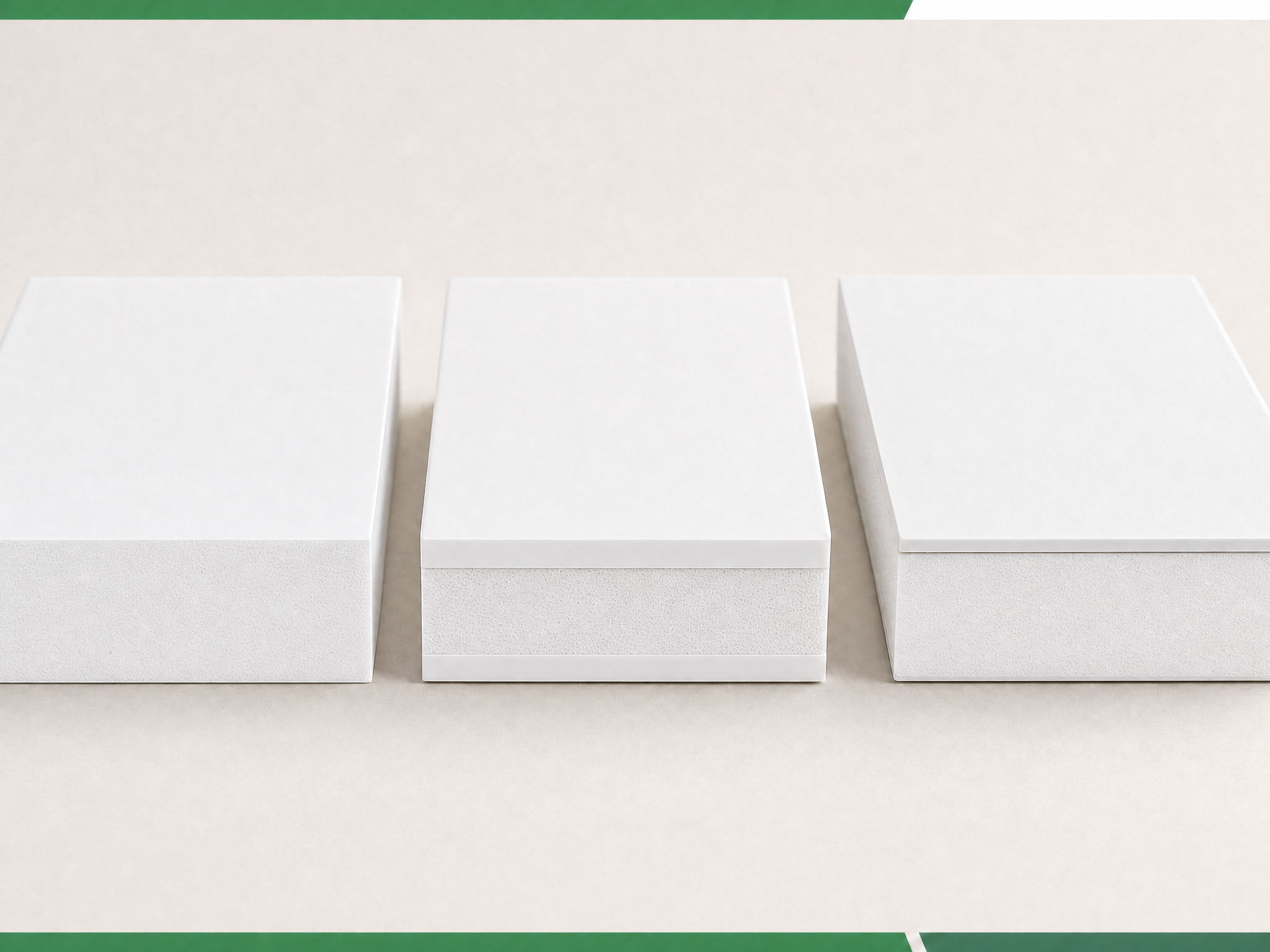
Figure 1. Three PVC foam board structures compared by physical cross-section.
1. Free Foam (also called open-cell or standard foam)
A uniform, lower-density foam with no dense skin. Density typically 0.3–0.35 g/cm³, thickness 1–20 mm. Light, economical, and intended for flat applications: advertising boards, screen printing, CNC engraving and short-term displays.
|
Limitation It does not hold a screw or a groove reliably, so it is the wrong material for anything load-bearing. |
2. Celuka / Integral Skin Foam
A controlled foaming process in which a cooled calibrating die forms a dense outer skin around a lighter core. Density typically 0.4–1.0 g/cm³, thickness 1–30 mm. The hard skin is what allows grooving, screw fixing and use as a structural component.
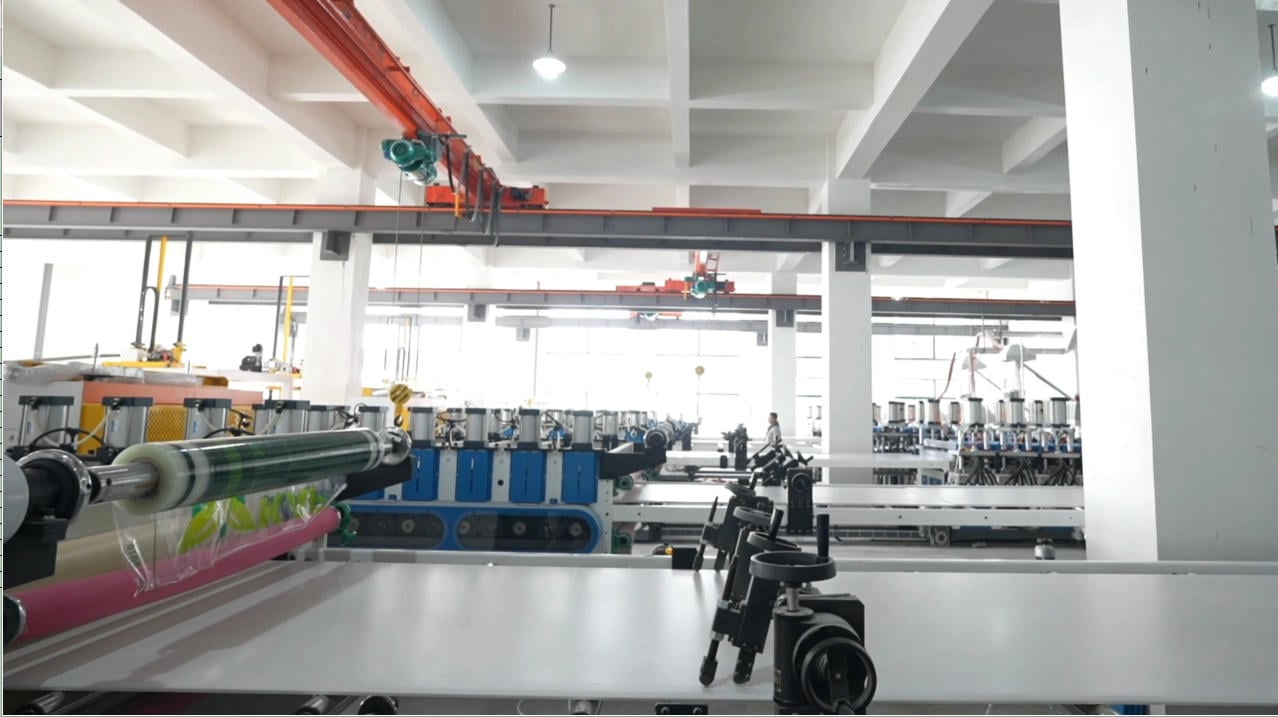
Figure 2. PVC foam board passing through an industrial calibration line.
Celuka is a process name that became a product name. An important clarification: Celuka is an integral-skin PVC foam board — it is not automatically the same thing as a separately co-extruded multilayer sheet.
3. Co-extrusion
Two extruders feed one die, so the surface layer and the core have separate formulations. That is what makes co-extrusion different from standard Celuka: the surface layer can be optimised purely for hardness, scratch resistance, chemical resistance and weatherability, independently of the core. Density typically 0.5–0.85 g/cm³, thickness 3–30 mm, available in 3 core colours (white / black / yellow) plus 9 surface colours.
Common Names You Will Meet
|
Name |
What it generally refers to |
Notes |
|
Celuka |
Integral-skin (dense-skin) PVC foam board |
A process name that became the product name |
|
Forex |
Rigid PVC foam board |
Widely used trade name; check process and density — it does not fix either |
|
Foamex |
PVC foam board |
Widely used trade name in some markets |
|
Sintra |
Moderately expanded PVC board |
Registered brand of 3A Composites |
|
KömaCel |
Integral skin-foam PVC-U sheet |
Registered brand of Kömmerling |
|
Sunboard |
PVC foam board |
Widely used trade name, particularly in South Asia |
|
Komatex / Komatex-family |
Foamed PVC sheet |
Related brand family from the same producer as KömaCel |
|
Foam PVC / expanded PVC / PVC foam sheet |
Generic description |
Says nothing about process or density |
Third-party brand names above are used for identification only. We are not affiliated with, and do not manufacture, these brands.
|
Key observation The names cluster around the process, not the density. Two boards both sold as “Celuka” can be 0.45 g/cm³ or 0.95 g/cm³, and they will behave nothing alike. |
What the Process Actually Changes
|
Property |
Free foam |
Celuka (integral skin) |
Co-extrusion |
|
Typical density |
0.3–0.35 g/cm³ |
0.4–1.0 g/cm³ |
0.5–0.85 g/cm³ |
|
Typical thickness |
1–20 mm |
1–30 mm |
3–30 mm |
|
Surface |
Soft, no dense skin |
Dense hard skin |
Dedicated hard surface layer |
|
Grooving and screwing |
Not reliable |
Yes |
Yes — best retention |
|
Colour consistency |
Mainly white |
Surface and core colours indistinguishable |
3 core + 9 surface colours |
|
Weather resistance |
Low |
Medium |
Best |
|
Cost |
Lowest |
Higher |
Highest |
|
Typical use |
Advertising, printing, engraving |
Furniture, cabinetry, bathroom units, construction |
Outdoor and high-touch commercial surfaces |
Density Decodes the Name
If you remember one thing from this article, make it this table. Density is the number that determines behaviour.
|
Density |
Typical product |
Best for |
|
0.3–0.35 g/cm³ |
Free foam |
Advertising displays, screen printing, CNC engraving |
|
0.4–0.5 g/cm³ |
Celuka, mid range |
Indoor decorative panels, non-load-bearing partitions |
|
0.5–0.7 g/cm³ |
Celuka high range / WPC / co-extrusion |
Cabinet carcasses, doors, wall substrates, hardware-mounting areas — the most commonly used range |
|
0.7–1.0 g/cm³ |
Celuka extra-high / co-extrusion |
Load-bearing cabinets, countertop substrates, machined parts |
|
Remember the overlap A 0.6 g/cm³ board could legitimately be sold under any of several names. Only the density tells you what you are getting. |
Higher density is not automatically better, either. It means greater strength and screw-holding, but also more weight, higher cost and faster tool wear. Match the density to the job.
How to Order Without Using Brand Names
Replace the name in your enquiry with a five-line specification:
Process — free foam, Celuka (integral skin) or co-extrusion
Density — with a tolerance (e.g. 0.55 g/cm³ ± 0.02)
Thickness — with a tolerance
Sheet size — and whether custom sizes are acceptable
Application — what the board will actually be used for
|
Why this works That specification can be quoted unambiguously by any supplier, in any country, whatever names they normally use. It also gives you something to hold them to if the delivered board does not match. |
Five Questions to Ask When a Supplier Quotes a Brand Name
Which of the three processes is this — free foam, integral skin or co-extrusion?
What is the nominal density, and what is the tolerance?
What is the thickness tolerance, and is it written in the PI or contract?
Is the sheet white through the core, or is it a white surface over a different core colour?
Can you send the TDS and a physical sample before I commit to the order?
A supplier who can answer all five is selling you a specification. One who can only repeat the brand name is selling you a word.
Frequently Asked Questions
Is Forex the same as Celuka?
Not necessarily. “Forex” is a trade name, while “Celuka” describes a process — an integral-skin board with a dense outer skin. A board sold as Forex may or may not be integral-skin, and may be produced at any of several densities. Always confirm the process and the density.
Is Sintra the same as Celuka board?
Sintra is a registered brand of moderately expanded PVC board, while Celuka is a process name for integral-skin foam board. They belong to the same broad material family, but they are not interchangeable terms.
What is the difference between Celuka and co-extrusion?
Celuka forms its skin through the foaming and calibrating process. Co-extrusion uses two extruders and one die so that the surface layer and the core have separate formulations — which lets the surface be optimised for hardness and weatherability independently. Co-extrusion board is the better choice for outdoor and high-touch applications.
How do I know if I have been sent the right board?
Check density first — weigh a precisely cut piece and calculate. Then check thickness with a caliper and inspect the cross-section: an integral-skin board shows a visibly denser outer layer, while a free-foam board is uniform throughout.
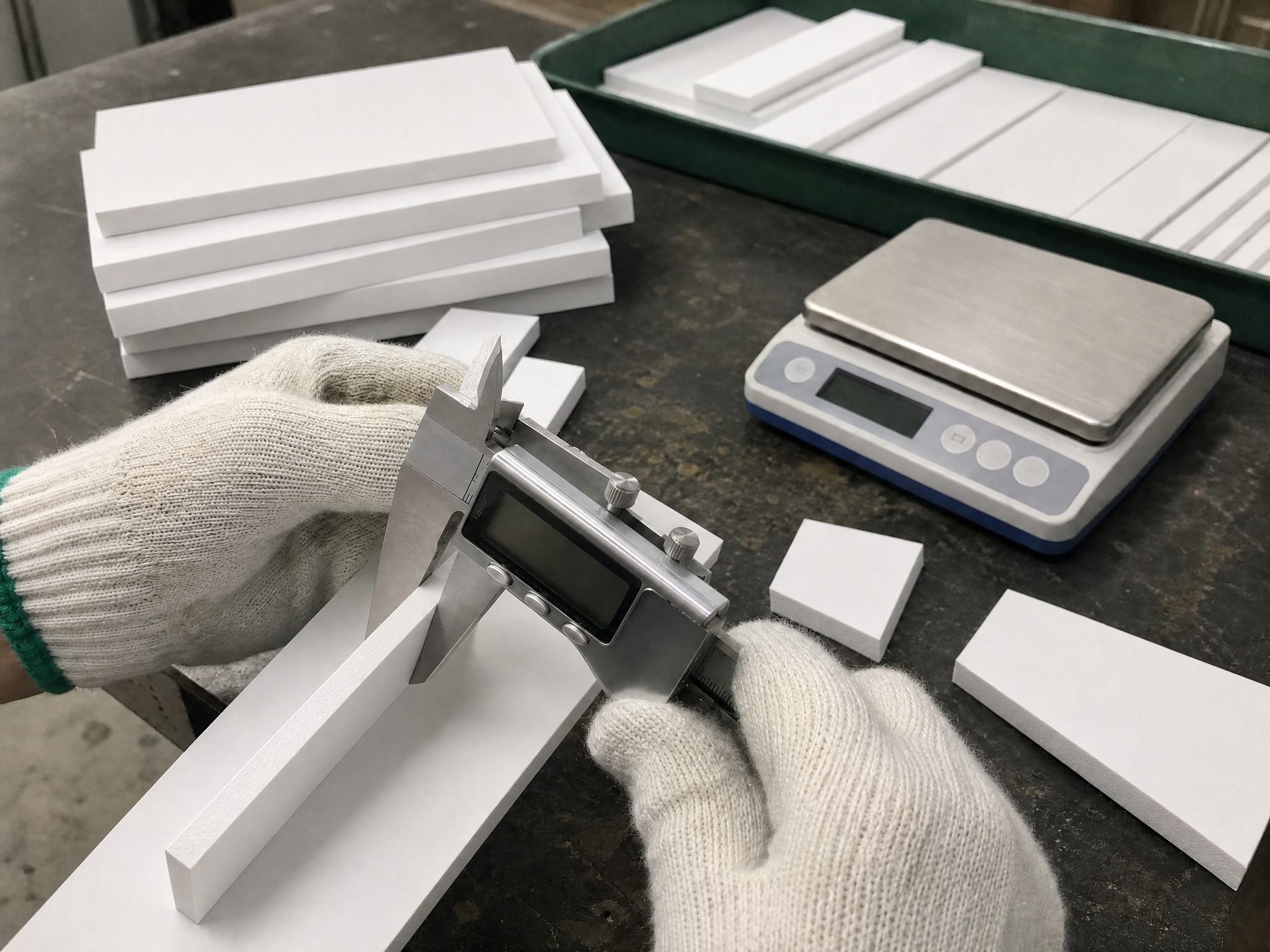
Figure 3. Factory QC check using a caliper, scale and cut board samples.
Can Pluswin make a board to my own specification instead of a standard name?
Yes. Density is adjustable from 0.3 to 1.0 g/cm³, colour can be matched to any Pantone reference, and size, thickness, facing material (7 options) and packaging can all be customised. Send us the five-line specification above and we will quote against it.
Send Us Your Specification
|
Need help comparing two quotations? If you are holding two quotations for “the same” board and cannot tell which one you need, send us both. We will tell you which process and density each one actually describes — even if the answer is that neither matches your application. |
Hangzhou Jiaying Trade Co., Ltd. (Pluswin) — manufacturer of Celuka, free foam, co-extrusion, WPC, laminated, marble UV and wall panel products. Established 2006 in Hangzhou, Zhejiang, China.
Recommended Products

Hot News
-
How to Read a PVC Foam Board TDS (and Write a Spec That Protects You)
2026-10-22
-
Importing PVC and WPC Boards from China: Landed Cost, HS Codes and Customs Documents
2026-10-22
-
PVC and WPC Board Fire Ratings Explained: ECE R118, ASTM E84 and EN 13501-1
2026-10-22
-
How to Cut, Drill and Bend PVC Foam Board: A Complete Fabrication Guide
2026-09-24
-
PVC & WPC Foam Board FAQ
2026-09-24
-
PVC Foam Board & WPC Board FAQ: Products, Customization, Quality and Shipping
2026-09-08
-
How to Test the Quality of PVC Foam Board: A Practical Buyer’s Guide
2026-09-08
-
Luxury Without the Price Tag: How PVC Marble Sheets Are Redefining Modern Interior Aesthetics
2026-08-14
-
Discover the rigorous quality control process inside the PLUSWIN factory. Learn how we guarantee consistent thickness, zero formaldehyde, and superior durability in every PVC board batch
2026-07-21
-
CustomSize PVC Foam Boards from Professional Manufacturer JIAYING PLUSWIN
2026-06-05