

PVC Foam Board vs PET / PETG Foam Board
Technical Comparison & Application Guide
|
SEO META & PUBLISHING SPECIFICATIONS Meta Title: PVC Foam Board vs PET / PETG Foam Board: Properties, Temperature & Sustainability |
1. Introduction: Thermoplastic Foams in Modern Engineering & Signage
In recent years, the polymer sheet and structural core industry has seen rapid technological evolution. While Expanded Rigid PVC Foam Board (Celuka & Free-Foam) remains the established global workhorse for visual communication, interior cabinetry, and architectural fabrication, PET (Polyethylene Terephthalate) and PETG (Polyethylene Terephthalate Glycol-modified) Foam Boards have emerged as compelling structural alternatives—particularly in composite sandwich structures, high-temperature environments, and sustainability-focused projects.
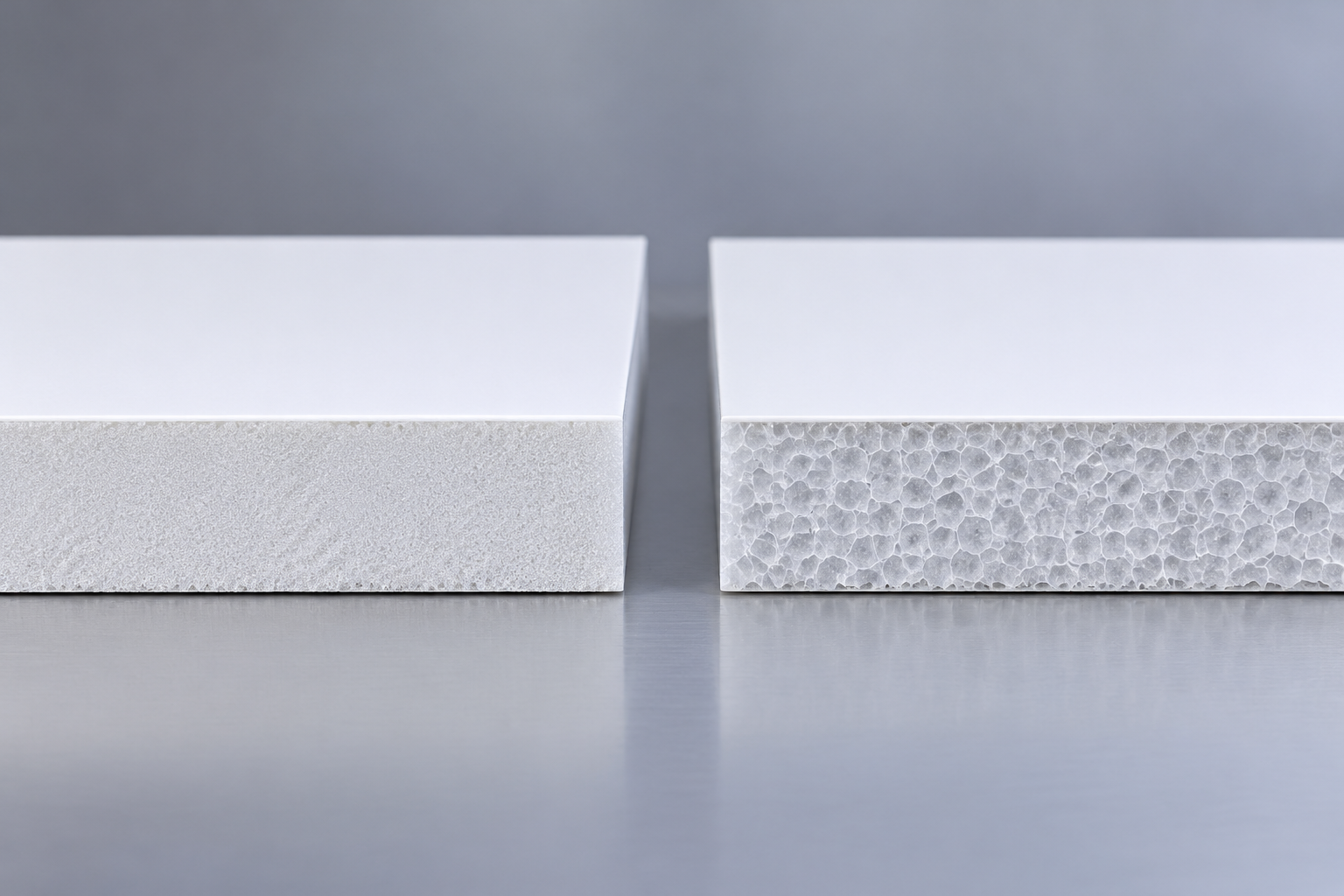
Figure 1: High-detail material cross-section comparison between an 18mm Rigid PVC Foam Board (smooth solid skin, dense micro-cellular core) and an 18mm structural closed-cell PET thermoplastic foam core board.
2. Chemical Architecture & Polymer Fundamentals
2.1 Rigid PVC Foam Board
- Base Polymer: Polyvinyl Chloride with specialized blowing agents, impact modifiers, and internal/external lubricants.
- Manufacturing Process: Continuous extrusion through a Celuka cooling calibrator or free-foam slot die.
- Structural Profile: Closed-cell microcellular matrix bounded by dense, smooth integral outer skins.
- Key Advantage: Remarkable balance of chemical resistance, self-extinguishing flame retardancy, ultra-smooth surface printability, and competitive mass production economics.
2.2 PET & PETG Foam Board
- Base Polymer: Polyethylene Terephthalate (standard PET or glycol-modified PETG), often utilizing post-consumer recycled rPET resin.
- Manufacturing Process: High-temperature continuous gas extrusion with supercritical CO2 or chemical blowing agents.
- Structural Profile: Uniform closed-cell foam with exceptional shear strength and high heat distortion resistance.
- Key Advantage: 100% circular recyclability, thermoformability, superior high-temperature processing compatibility (up to 150°C for resin infusion), and high fatigue life.
3. Comprehensive Technical Property Matrix
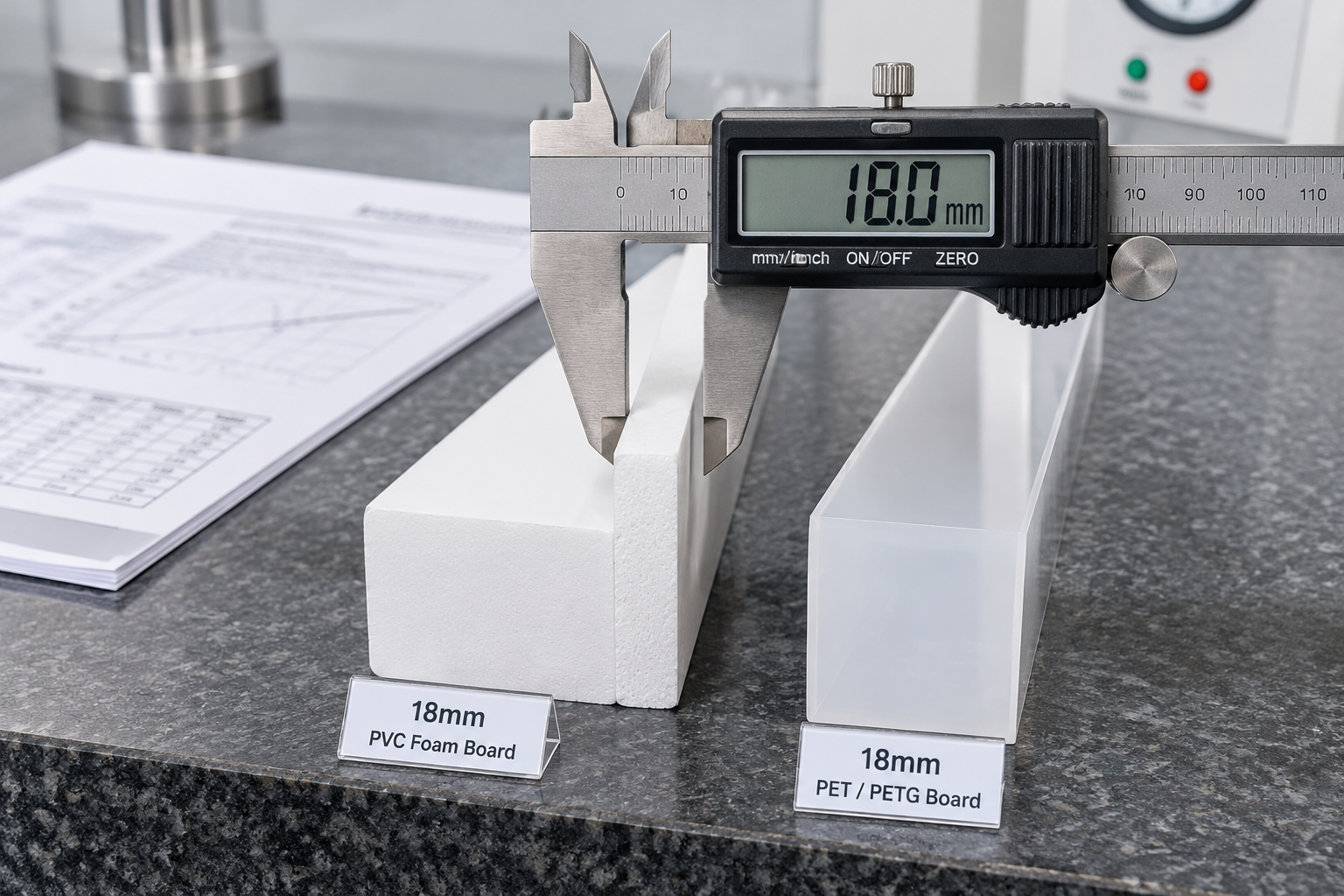
Figure 2: Precision gauge measurement and laboratory test setup verifying 18.0mm thickness tolerances and mechanical integrity on engineering test samples.
|
Property / Parameter |
18mm Rigid PVC Foam Board |
18mm PET / PETG Foam Board |
|
Primary Target Market |
Visual Signage, POP Displays, Marine/RV Furniture, Partitions |
Composite Sandwich Cores (Wind, Marine, Transit), Thermoformed Parts |
|
Typical Apparent Density |
0.45 - 0.70 g/cm³ (450 - 700 kg/m³) |
0.065 - 0.30 g/cm³ (Core) / up to 0.60 g/cm³ (Solid face) |
|
Max Continuous Operating Temp |
approx. 60°C - 65°C (140°F - 149°F) |
approx. 100°C - 150°C (212°F - 302°F) |
|
Heat Deflection Temp (HDT @ 0.45 MPa) |
approx. 68°C - 72°C |
approx. 135°C - 155°C |
|
Resin System Compatibility |
Epoxies, PU adhesives, PVC solvent cements |
Polyester, Vinyl Ester, Epoxy, Phenolic resins |
|
Surface Finish & Direct Printability |
Ultra-smooth integral skin; direct UV flatbed ready |
Fibrous/grid core; PETG solid skins offer high gloss |
|
Screw Holding & Fastening |
Superior direct screw retention along face & 18mm edge |
Moderate (requires inserts or skin lamination) |
|
Thermoforming & Deep Drawing |
Moderate (shallow curves via radiant heat) |
Exceptional (can be deep-drawn & 3D vacuum formed) |
|
Flame Retardancy |
Inherently self-extinguishing (UL94 V-0, Class B1) |
Moderate (Standard PET is flammable; needs FR additives) |
|
Recyclability & Sustainability |
Thermoplastic recyclable; established PVC streams |
100% closed-loop recyclable (often >90% rPET bottle flake) |
|
Commercial Cost per Unit Volume |
Highly cost-effective (mature extrusion economy) |
Moderate to Premium (specialized core processing) |
4. Key Differentiators: Thermal, Mechanical & Ecological
4.1 Thermal Stability & Composite Processing
Rigid PVC Foam Board softens around 65°C - 70°C. While ideal for ambient interior and moderate exterior signage, it cannot endure high-temperature curing cycles (>100°C) in composite prepreg autoclaves or resin infusion ovens. PET Foam Board is engineered specifically for thermal endurance, withstanding peak processing temperatures up to 150°C without core collapse or outgassing.
4.2 Surface Smoothness & Visual Fabrication
Rigid PVC Foam Board (18mm) produces a pristine, porcelain-smooth, matte white outer skin requiring zero priming, sanding, or surface treatment before direct UV flatbed inkjet printing, screen printing, or spray painting. PET foam is primarily designed as an internal core material and typically requires co-extruded solid PETG face sheets or laminated composite skins for equivalent visual smoothness.
4.3 Circular Economy & Green Procurement
PET / PETG has gained tremendous momentum among European and North American buyers with strict Environmental Product Declarations (EPD), utilizing post-consumer rPET bottle flake. PVC foam is also fully recyclable into secondary industrial PVC profiles (decking, conduits).
5. Industrial Applications & Selection Guide
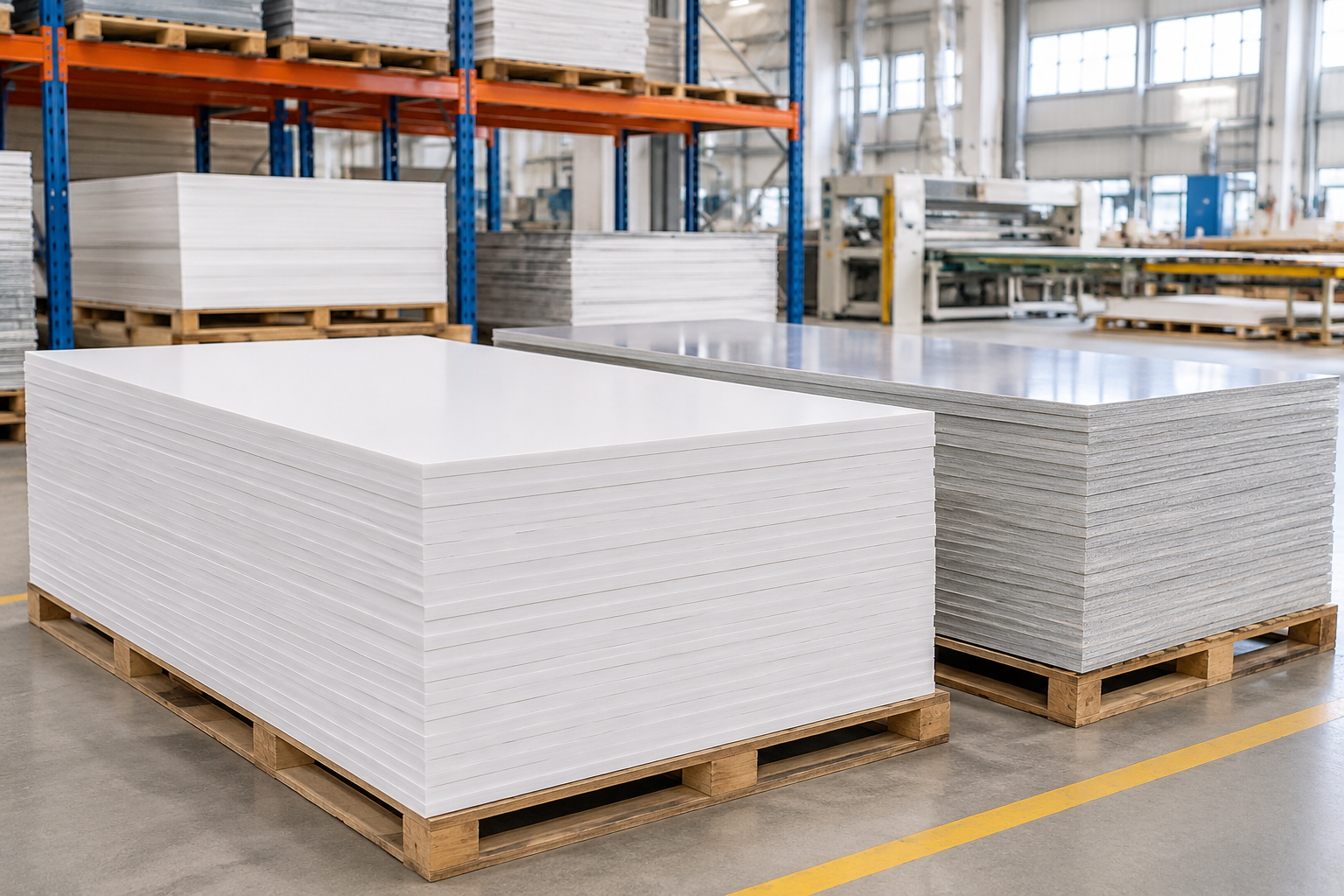
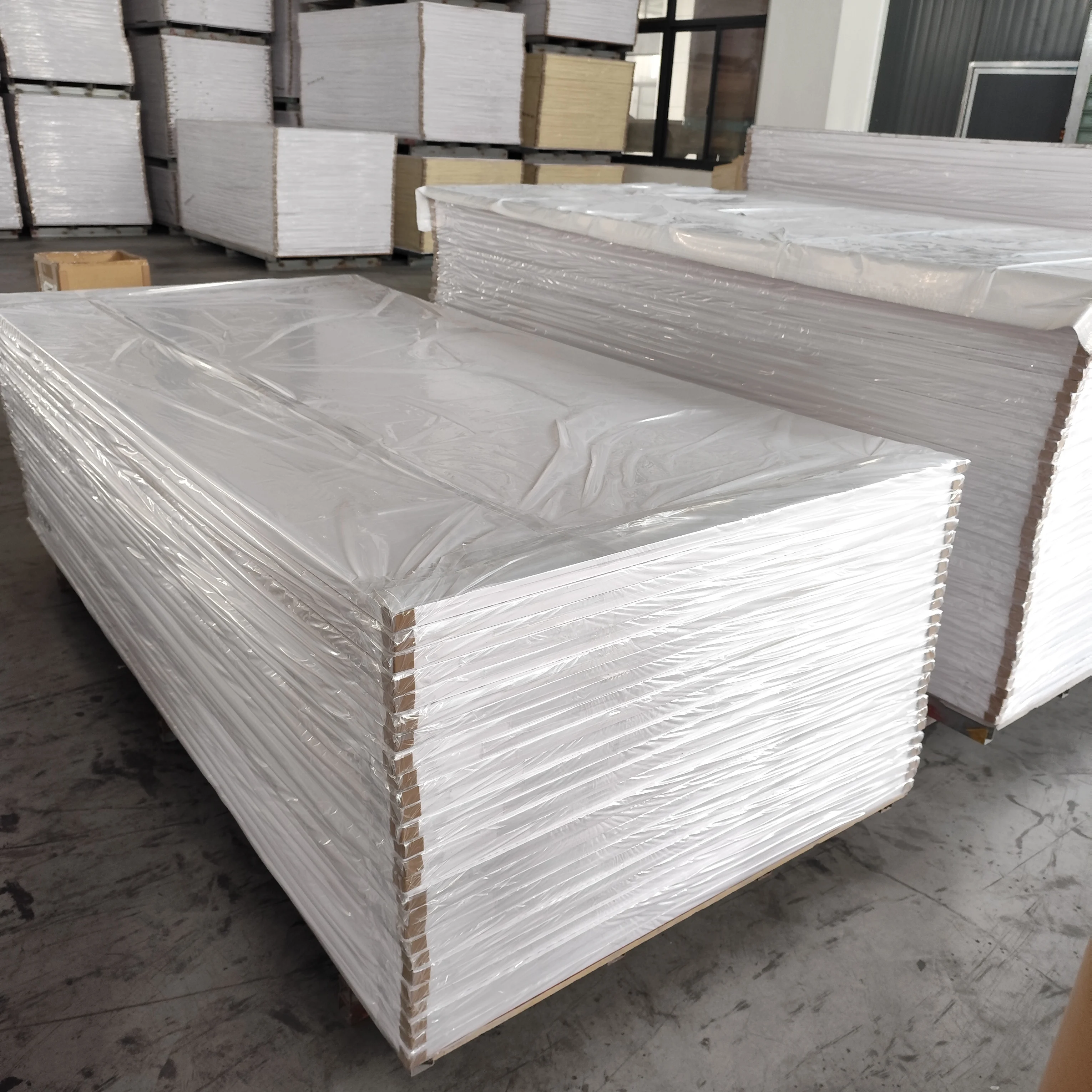
Figure 3: Palletized storage of 18mm PVC foam sheets and PET composite panels in an export manufacturing warehouse.
When to Select 18mm Rigid PVC Foam Board:
- Architectural Signage & 3D Letters: Best-in-class machinability, clean edge finish, and direct screw-fastening capability.
- Moisture-Proof Cabinetry & Bathroom Furniture: 100% waterproof, rot-proof, termite-proof, with excellent screw retention for concealed hinges.
- Retail POS & Exhibition Displays: Superior surface flatness for direct UV printing, combined with an unbeatable price-to-performance ratio.
- Marine Interior Wall Panels & RV Partitions: Lightweight moisture barrier that accepts HPL laminates with contact adhesives.
When to Select PET / PETG Foam Board:
- Wind Turbine Blades & Marine Hulls: Serving as lightweight structural core materials sandwiched between fiberglass/carbon fiber skins.
- High-Temperature Rail & Bus Panels: Meeting strict fire-smoke-toxicity (FST) standards when combined with phenolic skins.
- 3D Thermoformed Structural Components: Deep-draw vacuum forming for specialized automotive and industrial enclosures.
- Strict 'Zero-PVC' Eco Campaigns: When brand owners mandate 100% rPET materials for display structures.
Recommended Products

Hot News
-
How to Install PVC Foam Board on a Wall: Adhesives, Fixings and Expansion Gaps
2026-10-30
-
Meet PLUSWIN at the 140th Canton Fair
2026-10-26
-
Importing PVC and WPC Boards from China: Landed Cost, HS Codes and Customs Documents
2026-10-22
-
PVC and WPC Board Fire Ratings Explained: ECE R118, ASTM E84 and EN 13501-1
2026-10-22
-
How to Cut, Drill and Bend PVC Foam Board: A Complete Fabrication Guide
2026-09-24
-
PVC & WPC Foam Board FAQ
2026-09-24
-
PVC Foam Board & WPC Board FAQ: Products, Customization, Quality and Shipping
2026-09-08
-
How to Test the Quality of PVC Foam Board: A Practical Buyer’s Guide
2026-09-08
-
Luxury Without the Price Tag: How PVC Marble Sheets Are Redefining Modern Interior Aesthetics
2026-08-14
-
Discover the rigorous quality control process inside the PLUSWIN factory. Learn how we guarantee consistent thickness, zero formaldehyde, and superior durability in every PVC board batch
2026-07-21