

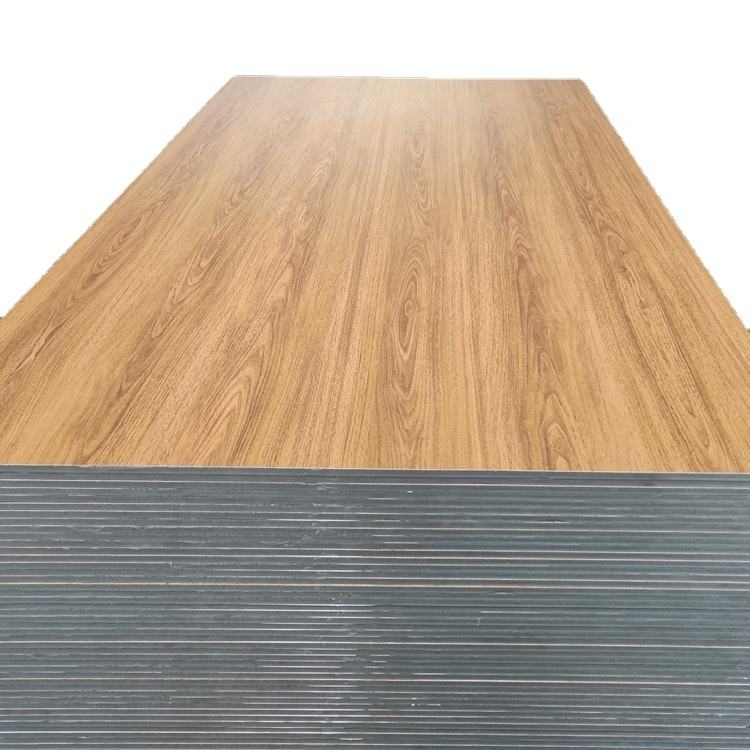
One of the most important factors to consider is actually the density grade of PVC foam board, it directly influences its performance, longevity and cost. If the density is too low, the board will likely dent or deform when subject to stress, or can sag if it is bearing a load. If the density is too high you might be spending money on strength that is not necessary. Knowing density grades and working with manufacturer that reliably produces consistent grades is crucial whether application is a bathroom cabinet or an outdoor sign. So, how do you pick the right grade?
1. Understanding Density Grades: Low, Medium, and High
The density of PVC foam board is typically expressed as g/cm³ (or kg/m³), which fall into the following 3 categories:
Low density (0.35–0.45 g/cm³): light, easy to cut, economical. Good for indoor sign, display and temporary structure that will not be put under stress.
Medium density (0.45–0.55 g/cm³): This seems to be the most versatile range. They are light, reasonably strong and can hold screws well. Good for kitchen cabinet, bathroom vanity and wall panels.
High density (0.55–0.70 g/cm³): Rigid and will have excellent impact resistance, load bearing capabilities. Suitable for industrial use, load bearing furniture and outdoor signs to resist wind etc.
A good manufacturer, JIAYING (PLUSWIN), provides PVC foam board in all three density categories with consistent tolerances. Since 2009, PLUSWIN has continually improved their extrusion process and foaming technology to achieve such an outstanding achievement that any batch of Pluswin's PVC foam board with any thickness is strictly controlled within a specific density range.
2. Matching Density to Your Application
In the application, incorrect density will lead to failure of the field or excess cost of material. Let's see how:
Kitchen and bathroom cabinets: 0.50-0.55g/cm³ (middle density) guarantees the perfect retention for screw of hinge and handles, resisting humidity no expanding and enough rigility. The PVC foam board or the laminated board both from PLUSWIN can serve this density.
Wall decoration in commercial projects: For Shopping mall, school, hospital etc. The middle density (0.45-0.50g/cm³) ensures both easy installing and durability. The PLUSWIN's laminated boards are no toxity and environmental friendly and can let public place be opened immediately after decoration.
Advertising and signage: low to middle density (0.40-0.50g/cm³) is suitable for UV printing, carving as art work and display boards. In the contrast to KT board, MDF, PVC foam board is better for the rigility and weather-resistant. There are many colors in stock (white, black, grey, yellow, red) for PLUSWIN.
Industrial or outdoor applications: High density (0.60-0.70g/cm) is good for impact resisting and good retention for the heavy fasten as well as resisting the temperature varying. WPC foam board or high density PVC board from PLUSWIN Premium product line must be selected.
3. Why Factory Quality Control Determines Real Density
All buyers figure they're going to receive the density that is specified on the sheet of data we provided. But very few, if any, manufactures can consistently provide this sheet to sheet. If your board density varies it results in soft spots, bowing, and poor screw holding ability.
JIAYING (PLUSWIN) maintains a strict documented in process quality checks. During each production run the board is tested on many parameters:
Uniformity of density over the board
Hardness of the surface (Shore D)
Thickness tolerance (±0.1 mm)
Water absorption rate
We ship over $15 million in products to over 30 countries annually, and we maintain both the laboratory equipment and the qualified technician to determine the density of each sheet before it leaves our facility. If you have ordered from PLUSWIN you aren't relying on the same general specification, you're relying on us to perform the checks to ensure the board meets your requirements.
4. Density vs. Cost: Finding the Optimal Balance
Density. This dictates the price of each sheet, as more material is needed with the higher density and it requires slow extrusion rates. Setting density too high costs unnecessary money, as well as too low can cause products to be returned and brand reputation to suffer.
Test samples at various densities for actual application. Reputable suppliers such as PLUSWIN supply cut samples with technical data sheets to do so. For cabinet makers, the optimal value life cycle will be around medium density (0.50 g/cm³). Sign makers requires flat, warp free boards for UV printing, and low medium density (0.45 g/cm³) with internal stresses properly relieved is perfectly sufficient.
PLUSWIN’s engineering team will review application, local environmental factors (climate), and construction (screw vs. Glue, CNC vs hand routing, and more) and guide to selection. This consulting aspect is actually unusual among commodity board vendors and stems from over fifteen years of solving customers’ application issues.
Summary
Correct PVC foam board density is actually the key technical decision that will affect the quality and profitability of your finished product. When selecting a density, consider your application and that your supplier has quality control procedures in place to consistently achieve the desired density. JIAYING(PLUSWIN) offers a history of production know-how, ISO grading procedures, and an annual export revenue of over $15 million that has earned the trust of kitchen cabinet manufacturers, contractors and agencies around the world. Contact PLUSWIN today for density samples and technical data on your upcoming project.